
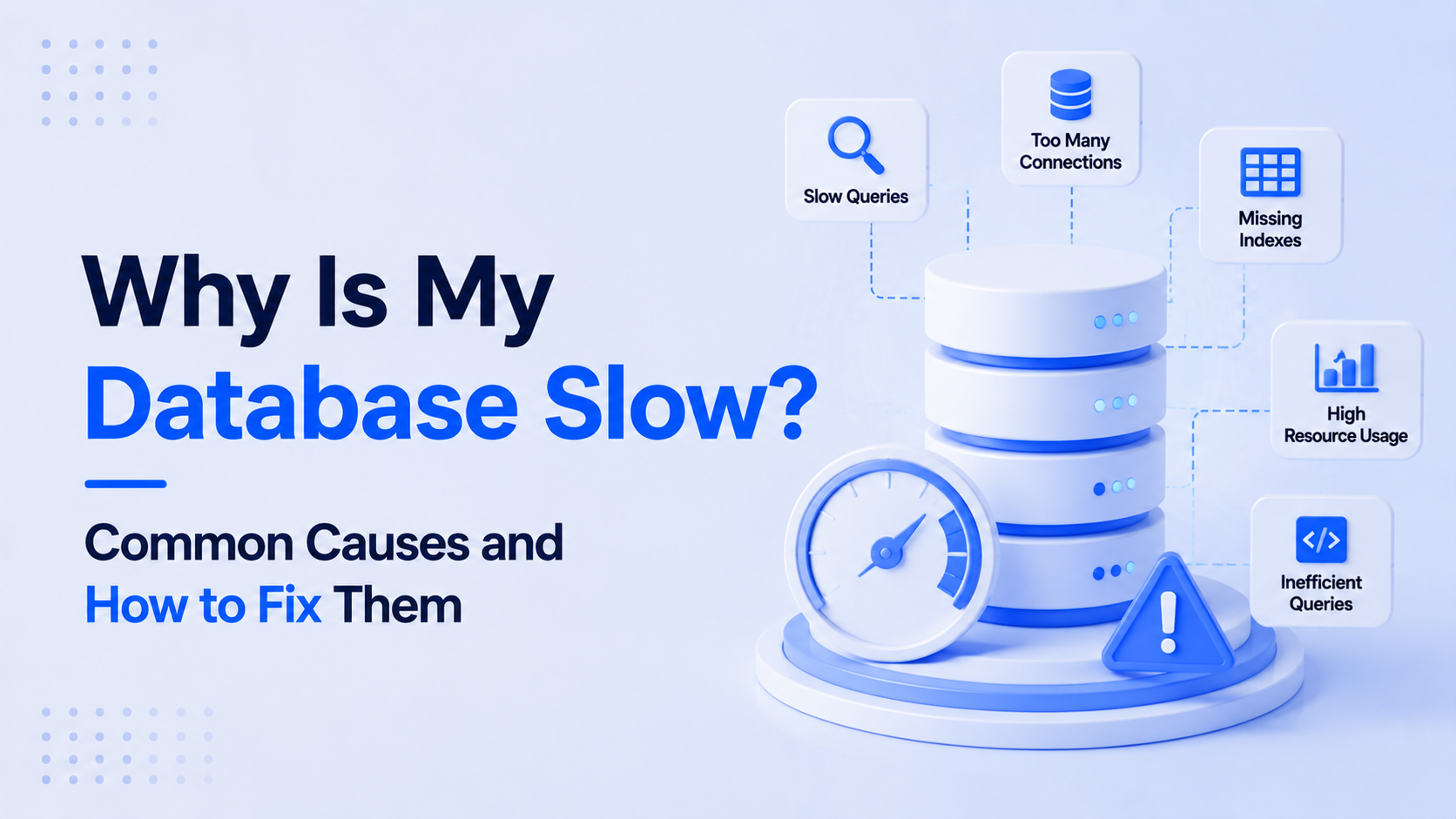
If you’ve ever searched for “why is my database slow”, you’re not alone. Database performance problems are among the most common challenges organizations face as applications, APIs, analytics platforms, and AI systems continue to grow.
A slow database can impact user experience, delay business operations, increase infrastructure costs, and create frustration for both technical teams and end users. While many organizations immediately consider upgrading hardware or scaling infrastructure, the root cause is often related to inefficient data access patterns, poor query performance, or excessive workload demands.
In this guide, we’ll explore the most common causes of database slowdowns and practical strategies to improve performance without unnecessary infrastructure investments.
Why Database Performance Matters
Databases sit at the heart of modern applications.
They power:
- Customer-facing applications
- Internal business systems
- APIs
- Reporting platforms
- Business intelligence dashboards
- AI and machine learning systems
When database performance declines, the effects ripple across the entire organization.
Common consequences include:
- Slower application performance
- Delayed reports and dashboards
- Poor customer experiences
- Reduced employee productivity
- Higher infrastructure costs
As businesses scale, these challenges often become more severe, making database performance optimization a critical priority.
Why Is My Database Slow?
Many organizations ask the same question:
Why is my database slow?
The answer is usually a combination of workload growth, inefficient queries, architectural bottlenecks, and resource constraints.
👉 Read More : How to Fix Database Performance Issues Fast
Common Signs of a Slow Database
Before identifying root causes, it’s important to recognize the warning signs.
Long Query Execution Times
Queries take significantly longer than expected to return results.
Application Latency
Applications become sluggish when retrieving data.
Slow API Responses
Users experience delays when interacting with APIs.
Dashboard Delays
Reports and analytics dashboards load slowly.
Timeouts and Failed Requests
Applications may fail entirely under heavy load.
Why Database Slowdowns Are Increasing
Several trends are contributing to modern database challenges:
Growing Data Volumes
Organizations collect more data than ever before.
More Connected Applications
Multiple systems access the same operational databases.
Analytics Workloads
Business intelligence tools continuously query production systems.
AI and Reporting Systems
AI copilots and reporting platforms consume large amounts of enterprise data.
As workloads increase, databases face greater pressure and performance often suffers.
What Causes High Database Load?
Understanding what causes high database load is essential for solving performance problems effectively.
Excessive Read Requests
One of the most common causes of database overload is excessive read activity.
Multiple systems may simultaneously query the same database:
- Mobile applications
- APIs
- Dashboards
- Reporting tools
- AI systems
This creates significant pressure on database resources.
👉 Read More : What Is a Data Product
Poor Query Design
Unoptimized SQL queries can dramatically impact performance.
Common issues include:
- Inefficient joins
- Nested queries
- Full table scans
- Excessive data retrieval
Poorly written queries often contribute directly to a slow database.
Missing or Incorrect Indexes
Indexes help databases locate information efficiently.
Without proper indexing:
- Query execution times increase
- Resource consumption grows
- Database latency rises
Incorrect indexing strategies can be almost as harmful as having no indexes at all.
👉 Read More : Top Data Governance Challenges and How to Overcome Them
API Overload
Modern APIs often generate thousands of repetitive database requests.
Common causes include:
- Duplicate queries
- Excessive polling
- Inefficient caching
- Multiple consumers requesting identical data
Understanding Database Performance Problems
Not all database performance problems originate inside the database itself.
Many are caused by broader architectural and operational issues.
Infrastructure Bottlenecks
CPU Limitations
Heavy workloads can overwhelm processing resources.
Memory Constraints
Insufficient memory reduces caching effectiveness.
Storage Latency
Slow storage devices increase read and write times.
👉 Read More : Top Data Governance Solutions for Secure Data Access
Architectural Bottlenecks
Direct Database Access by Multiple Consumers
Too many systems connecting directly to production databases creates contention.
Tight Coupling Between Systems
Applications become dependent on database performance.
Lack of Caching Layers
Without caching, every request hits the database directly.
Application-Level Issues
Chatty Applications
Applications that make excessive requests generate unnecessary workload.
Inefficient Data Access Patterns
Poor design increases database traffic.
Excessive Polling
Repeatedly requesting the same information creates avoidable load.
👉 Read More : What Is Data Governance? A Complete Guide
How Database Latency Impacts Applications
What Is Database Latency?
Database latency refers to the time required for a database to process and return a request.
Even small increases in latency can significantly impact application performance.
Common Sources of Database Latency
Network Delays
Poor connectivity can increase response times.
Query Execution Bottlenecks
Complex queries take longer to process.
Resource Contention
Multiple workloads competing for resources increase delays.
👉 Read More : Build an Internal Data Marketplace with Governance
Business Impact of High Latency
High database latency often results in:
- Poor customer experiences
- Reduced productivity
- Revenue loss
- Lower application reliability
How to Fix Slow Database Performance
Organizations looking to improve performance should focus on optimization before scaling infrastructure.
Optimize Database Queries
Effective query optimization can dramatically improve performance.
Strategies include:
- Query tuning
- Reviewing execution plans
- Eliminating unnecessary operations
- Simplifying complex joins
👉 Read More : Best Data Governance Tools
Improve Indexing
Proper indexing helps databases retrieve information faster.
Organizations should:
- Create indexes on frequently queried fields
- Remove redundant indexes
- Regularly review indexing strategies
Implement Caching
Caching reduces the number of requests sent directly to the database.
Examples include:
- Application caching
- Query result caching
- API caching
Reduce Unnecessary Reads
Many organizations repeatedly retrieve identical data.
Reducing duplicate requests can significantly improve performance.
How to Optimize Database Queries
One of the most effective ways to address performance issues is to optimize queries.
👉 Read More : What Is Data Access Control
Analyze Query Execution Plans
Execution plans reveal how databases process requests.
Reviewing them helps identify inefficiencies.
Eliminate Full Table Scans
Full table scans consume significant resources.
Proper indexing helps avoid them.
Use Proper Filtering
Retrieve only the records required.
Optimize Joins
Efficient joins reduce processing time.
Limit Returned Data
Avoid returning unnecessary columns or rows.
These techniques are fundamental for organizations performing database troubleshooting.
Database Troubleshooting Checklist
When investigating performance issues, follow a structured approach.
Identify the Bottleneck
Determine whether the issue is related to CPU, memory, storage, queries, or architecture.
Monitor Query Performance
Track execution times and resource consumption.
Review Resource Utilization
Analyze CPU, memory, and storage metrics.
Audit Database Connections
Identify excessive or unnecessary connections.
Analyze Workload Patterns
Look for spikes in usage and recurring bottlenecks.
Why Scaling Infrastructure Isn’t Always the Answer
When performance declines, many organizations immediately add more servers.
This approach often provides temporary relief but rarely addresses root causes.
Common drawbacks include:
- Rising infrastructure costs
- Increased operational complexity
- Temporary performance improvements
- Persistent architectural problems
The most effective solutions focus on optimization rather than simply scaling hardware.
Modern Approaches to Reducing Database Load
Modern organizations increasingly use architectural strategies to reduce database pressure.
Governed Data Products
Provide reusable and controlled access to enterprise data.
Data Delivery Layers
Separate consumers from operational databases.
Read-Optimized Architectures
Support analytics without impacting transactional systems.
Controlled Data Consumption
Reduce unnecessary queries.
Decoupling Consumers from Databases
Minimize direct database dependencies.
Elementrix helps organizations reduce database load through governed data products, secure data delivery layers, and controlled access to enterprise data.
How Elementrix Helps Improve Database Performance
Modern enterprises often struggle with growing read traffic and increasing data consumption.
Elementrix helps organizations solve database performance challenges by creating a secure layer between operational systems and data consumers.
Benefits include:
- Reduced direct database dependencies
- Governed data consumption
- Elimination of read storms
- Scalable data access
- Improved operational efficiency
This allows organizations to improve performance while maintaining governance and security.
Best Practices for Long-Term Database Health
To maintain performance over time, organizations should:
- Monitor performance continuously
- Govern data access
- Optimize queries regularly
- Implement smart caching
- Separate analytical and operational workloads
- Audit database usage
These practices help prevent recurring database performance problems.
Future Trends in Database Performance Optimization
The future of database performance management includes:
- AI-ready data architectures
- Data products
- Runtime governance
- Intelligent query optimization
- Self-service data delivery
- Controlled enterprise data access
Organizations that adopt these approaches will be better positioned to scale efficiently.
👉 Read More : Data Governance vs Data Management: What’s the Difference?
Frequently Asked Questions
Why is my database slow?
Databases often become slow due to excessive read requests, poor query design, missing indexes, high database load, and architectural bottlenecks.
How to fix slow database performance?
Organizations can improve performance by optimizing queries, implementing caching, reducing unnecessary reads, and improving database architecture.
What causes high database load?
High database load is typically caused by multiple applications, APIs, dashboards, analytics platforms, and AI systems accessing the same operational database simultaneously.
How to optimize database queries?
Review execution plans, improve indexing, eliminate full table scans, optimize joins, and return only the data needed.
Is database scaling always necessary?
No. Many performance issues can be resolved through optimization, caching, and improved data architecture before investing in additional infrastructure.
Improve Database Performance Without Increasing Costs
Many organizations continue adding servers and database resources to address performance challenges.
Elementrix helps enterprises reduce database load, improve performance, and scale data access through governed data products, secure delivery layers, and modern data architectures.
Start building a faster and more scalable data platform with Elementrix today.
Conclusion
If you’ve ever asked, “why is my database slow?”, the answer often extends far beyond hardware limitations.
Most database performance problems are caused by inefficient access patterns, poor query design, excessive read requests, and architectural bottlenecks.
Organizations that focus on optimization, database troubleshooting, and modern data delivery architectures can dramatically improve performance without continuously scaling infrastructure.
With Elementrix , enterprises can reduce database load, improve data delivery, and create a scalable foundation for future growth.