
Organizations today manage enormous amounts of sensitive information across databases, APIs, analytics platforms, cloud environments, and AI systems. As data access expands, protecting individual pieces of sensitive information becomes increasingly important.
This is where field level security plays a critical role.
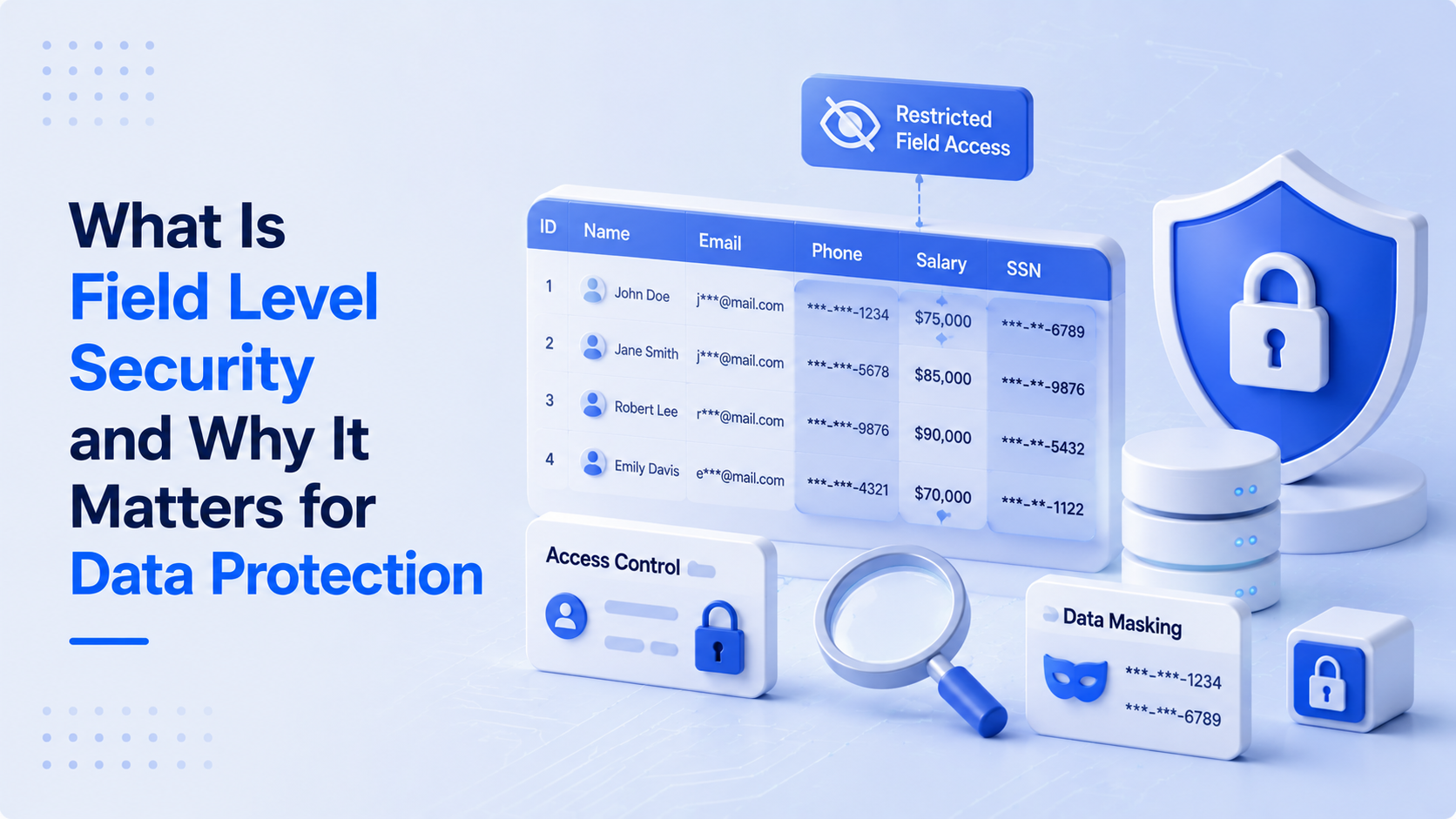
Unlike traditional access controls that govern entire tables or datasets, field level security allows organizations to control access to specific data elements such as customer names, email addresses, financial details, and other sensitive records.
As modern enterprises face growing compliance requirements and security threats, field level security has become an essential component of effective data protection strategies.
Why Field Level Security Is Essential in Modern Data Environments
The growth of digital transformation has increased the number of systems, users, and applications accessing enterprise data.
Organizations must now manage data across:
- APIs
- Analytics platforms
- Cloud environments
- AI applications
- Partner ecosystems
- Internal business systems
Traditional access controls often grant broad permissions that expose more data than users actually need.
For a practical field-selection worksheet and a before-and-after response, see our API data minimization guide.
This creates risks related to:
- Unauthorized access
- Data leakage
- Compliance violations
- Insider threats
- Excessive permissions
Modern enterprises require more granular controls that protect data at the field level while maintaining operational efficiency.
What Is Field Level Security?
Field level security is a data protection mechanism that controls access to specific fields within a dataset, table, or record.
Instead of granting access to all information within a record, organizations can determine exactly which fields users are allowed to:
- View
- Edit
- Update
- Mask
- Hide completely
For example, a customer support representative may need access to a customer’s name and account status but should not see their social security number or payment information.
Field level security makes this possible.
👉 Read More : Top Data Governance Challenges and How to Overcome Them
How Field Level Security Differs from Traditional Access Controls
Traditional security models typically focus on:
Table-Level Security
Controls access to entire tables or datasets.
Row-Level Security
Controls access to specific records.
Field-Level Security
Controls access to individual fields within those records.
For example:
| Security Type | Access Control Level |
| Table-Level Security | Entire table |
| Row-Level Security | Individual records |
| Field-Level Security | Individual data fields |
Because it operates at a more granular level, field level security provides stronger protection for sensitive information.
👉 Read More : Top Data Governance Solutions for Secure Data Access
Why Field Level Security Matters for Data Protection
Organizations increasingly store sensitive information across multiple business systems.
Examples include:
- Customer records
- Financial information
- Employee data
- Healthcare records
- Proprietary business information
Without field-level controls, users may gain access to data they do not actually need.
Field level security helps organizations:
- Protect sensitive business information
- Reduce unnecessary data exposure
- Support regulatory compliance
- Limit insider threats
- Improve trust in enterprise data access
This approach allows businesses to share data safely without compromising security.
👉 Read More : What Is Data Governance? A Complete Guide
How Field Level Access Control Works
What Is Field Level Access Control?
Field level access control allows organizations to define permissions for specific data elements.
Access decisions may be based on:
- User roles
- Departments
- Business functions
- Security policies
- Contextual attributes
When users access data, the system evaluates permissions and determines which fields should be visible.
Some fields may be:
- Fully visible
- Read-only
- Partially masked
- Completely hidden
This provides much greater flexibility than traditional access models.
👉 Read More : Best Data Governance Tools
Examples of Field Level Access Control
Human Resources
HR managers can view employee salary information while general managers cannot.
Customer Service
Support agents can access customer names but not payment details.
Finance Teams
Financial analysts can access revenue figures but not confidential payroll data.
Healthcare Organizations
Doctors may view medical records while administrative staff see only limited patient information.
👉 Read More : Build an Internal Data Marketplace with Governance
Sensitive Data Protection in Modern Enterprises
What Is Sensitive Data?
Sensitive data includes any information that could create security, privacy, financial, or compliance risks if exposed.
Examples include:
- Personally identifiable information (PII)
- Financial records
- Healthcare information
- Customer account details
- Confidential business data
Strong sensitive data protection strategies are essential for modern enterprises.
Why Sensitive Data Protection Matters
Organizations that fail to protect sensitive information often face:
- Regulatory penalties
- Security breaches
- Reputation damage
- Loss of customer trust
- Operational disruptions
Field level security helps reduce these risks by limiting unnecessary access to critical information.
What Is PII Protection and Why Is It Important?
Personally identifiable information (PII) refers to data that can identify an individual.
Examples include:
- Full names
- Email addresses
- Phone numbers
- National identification numbers
- Financial account information
Effective PII protection ensures that only authorized users can access personally identifiable information.
Field-level controls are one of the most effective methods for protecting PII while maintaining business usability.
👉 Read More : What Is Data Access Control
What Is Data Masking?
Understanding Data Masking
Data masking is the process of hiding or obfuscating sensitive information while preserving the usefulness of the data.
For example:
Instead of displaying:
john.doe@email.com
The system may display:
j***@email.com
This allows users to work with data without exposing sensitive information.
Static vs Dynamic Data Masking
Static Data Masking
Sensitive information is permanently altered in a copy of the dataset.
Dynamic Data Masking
Data remains unchanged in storage but is masked when displayed to users.
Dynamic masking is commonly used alongside field level security.
How Data Masking Supports Field Level Security
Combining data masking with field-level controls allows organizations to:
- Hide sensitive fields
- Provide partial visibility
- Reduce compliance risks
- Improve security without limiting usability
This creates a more flexible and secure data access model.
How Modern Platforms Enforce Data Security Fields
Modern governance platforms apply security controls at runtime through:
- Policy-based enforcement
- Role-aware visibility
- Dynamic masking
- Attribute-based access controls
- Audit logging
- Continuous monitoring
These capabilities help organizations manage data security fields consistently across enterprise environments.
Common Challenges Without Field Level Security
Organizations that lack field-level controls often face:
- Overexposed sensitive information
- Excessive user permissions
- Compliance failures
- Weak auditability
- Data leakage risks
- API security challenges
- AI-related exposure risks
As data ecosystems expand, these challenges become increasingly difficult to manage.
Field Level Security in APIs, Analytics, and AI Systems
API Security
APIs frequently expose enterprise data to internal and external consumers.
Field-level controls help ensure only approved information is returned.
The identity behind an API call also matters. Our application-level vs user-level data access guide explains delegated and service access using a two-app grant matrix, including the record and field boundaries each consumer needs.
Analytics Platforms
Business intelligence tools often aggregate sensitive information from multiple systems.
Field-level security protects confidential metrics while still enabling analytics.
AI and Copilot Systems
AI applications increasingly access enterprise knowledge and operational data.
Field-level controls help prevent AI systems from exposing confidential information or sensitive customer records.
This has become particularly important as organizations deploy enterprise AI assistants and copilots.
Best Practices for Implementing Field Level Security
Organizations should follow several best practices:
Classify Sensitive Data
Identify critical and regulated information.
Apply Least-Privilege Access
Grant only the permissions required for each role.
Use Dynamic Data Masking
Protect sensitive fields while preserving usability.
Centralize Policy Enforcement
Avoid duplicating access logic across systems.
Audit Field-Level Access
Track who accessed sensitive fields and when.
Monitor Data Usage Continuously
Detect unusual access patterns and security risks.
How Modern Data Governance Enhances Field Level Security
Modern governance frameworks strengthen field-level controls through:
- Policy-driven governance
- Runtime access enforcement
- Governed data products
- Centralized security controls
- Secure self-service access
Organizations that combine governance and field-level security achieve stronger protection while maintaining scalability.
How Elementrix Helps Secure Sensitive Data
Elementrix enables organizations to enforce field-level security through governed data access, centralized policy controls, secure data delivery, and enterprise-grade governance capabilities.
By combining policy-driven access controls with modern governance frameworks, Elementrix helps enterprises protect sensitive information without slowing down operations.
The Future of Field Level Security
The future of enterprise security is becoming increasingly intelligent and automated.
Emerging trends include:
- AI-driven access controls
- Context-aware permissions
- Zero trust architectures
- Real-time policy enforcement
- Automated data classification
- Governed AI data delivery
Organizations that adopt these capabilities will be better positioned to secure data in increasingly complex environments.
Frequently Asked Questions
What is field level security?
Field level security is a data protection method that controls access to specific fields within a dataset based on user roles or security policies.
How does field level access work?
Field level access works by applying permissions to individual data fields, determining whether users can view, edit, mask, or hide specific information.
Why is field level security important?
Field level security helps protect sensitive data, reduce compliance risks, prevent unauthorized access, and strengthen enterprise governance.
What is data masking?
Data masking is the process of hiding sensitive information while preserving the usability of the data for authorized users.
How does field level security support PII protection?
Field level security restricts access to personally identifiable information and can dynamically mask sensitive fields based on policies and permissions.
Protect Sensitive Data with Field-Level Security and Governance
Modern enterprises need more than basic access controls.
Elementrix helps organizations secure sensitive data through field-level security, policy-driven access controls, dynamic data masking, and enterprise-grade governance.
Start protecting your critical data with Elementrix today.
Final Thoughts
As enterprise data ecosystems continue to grow, organizations must move beyond traditional access controls to protect sensitive information effectively.
Field level security provides a powerful way to control access to specific data elements, reduce compliance risks, support PII protection, and strengthen overall governance.
By combining field level access control, data masking, and centralized governance, organizations can deliver secure data access without sacrificing usability or scalability.
With Elementrix, enterprises can implement secure, policy-driven, and scalable field-level protection for modern data environments.