In today’s digital world, data is one of the most valuable assets any organization owns.
But without proper control, data quickly becomes:
- Inconsistent
- Insecure
- Difficult to trust
- Hard to manage at scale
That’s why data governance has become a critical priority for modern teams.
It’s no longer just about managing data —
it’s about controlling, protecting, and making data usable across the organization.
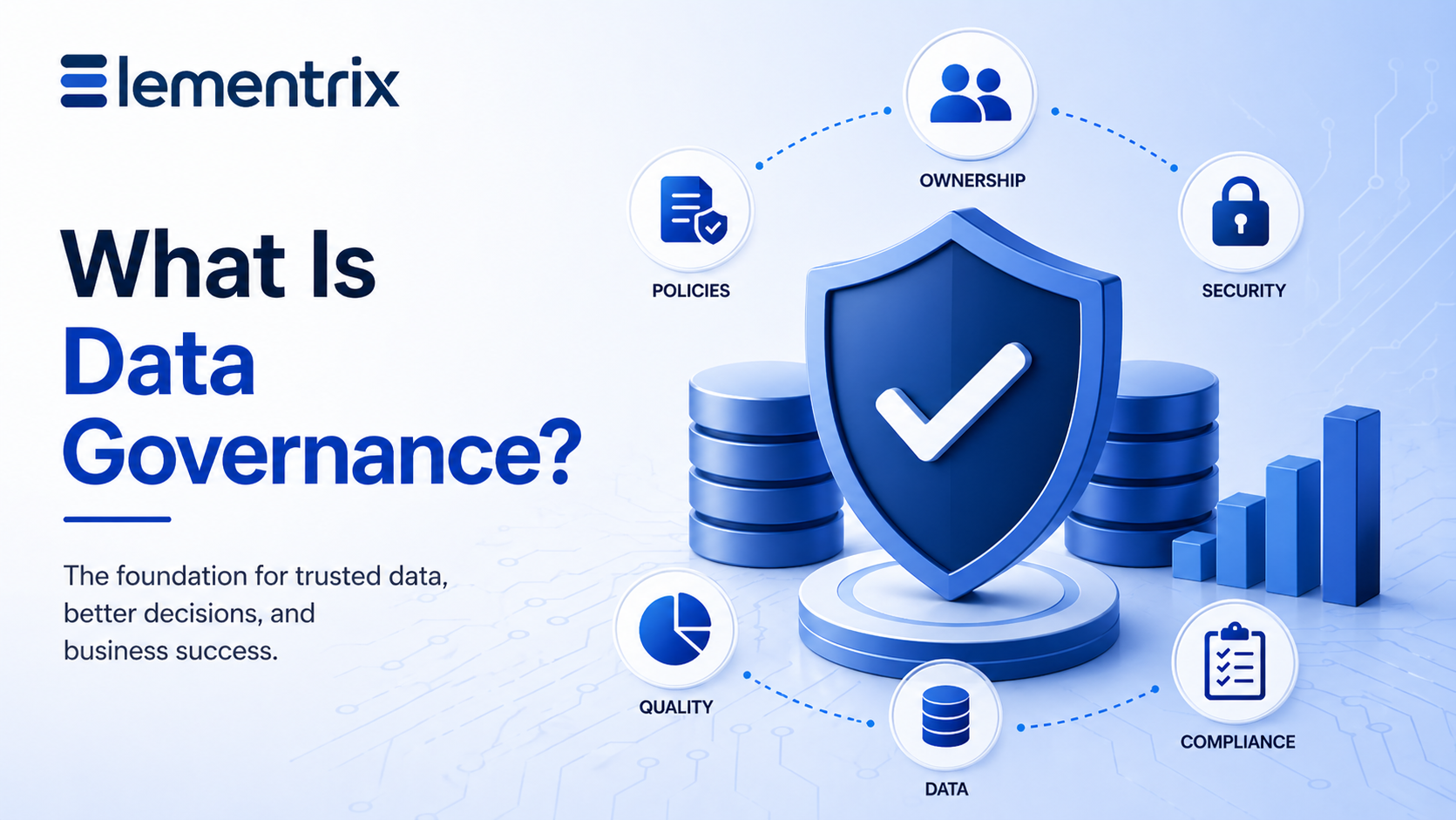
What Is Data Governance?
If you’re asking, “What is data governance?” — it refers to the set of processes, policies, and technologies that ensure data is:
- Accurate
- Secure
- Accessible to the right people
- Used responsibly
A strong data governance framework defines:
- Who owns the data
- Who can access it
- How it should be used
- How it is protected
In simple terms, data governance ensures that data is not just available — but trusted and controlled.
Why Is Data Governance Important?
If you’re wondering, “Why is data governance important?” — the answer lies in scale and risk.
As organizations grow, they face:
- More data sources
- More users accessing data
- More compliance requirements
- Higher risk of data exposure
Without proper governance, this leads to:
❌ Data silos
❌ Poor data quality
❌ Security risks
❌ Compliance issues
This is why enterprise data governance is essential.
It helps organizations:
✅ Improve data quality
✅ Reduce risk
✅ Enable secure data access
✅ Build trust in data
The Key Components of a Data Governance Framework
A modern data governance framework includes several core components:
1. Data Ownership
Clearly define who is responsible for each dataset.
2. Data Access Control
Ensure only the right users can access the right data.
3. Data Quality Management
Maintain accuracy and consistency across systems.
4. Data Governance Policy
Establish clear rules for how data should be handled.
5. Monitoring & Audit
Track how data is accessed and used.
Together, these elements create a system where data is both usable and controlled.
What Is the Data Governance Process?
The data governance process is the operational side of governance — how policies are applied in practice.
It typically includes:
1️⃣ Define Policies
Set rules for data access, usage, and security.
2️⃣ Assign Roles
Identify data owners, stewards, and consumers.
3️⃣ Implement Controls
Use data governance tools to enforce policies.
4️⃣ Monitor Usage
Track how data is accessed and used.
5️⃣ Improve Continuously
Refine policies as data and needs evolve.
A strong process ensures governance is not just theoretical — but executed consistently.
What Are Data Governance Tools?
If you’re asking, “What are data governance tools?” — they are technologies that help automate and enforce governance policies.
Modern data governance tools provide capabilities such as:
- Data discovery and cataloging
- Access control and permissions
- Policy enforcement
- Audit trails and monitoring
However, many tools focus only on visibility.
The real value comes from tools that can enforce governance at runtime, not just document it.
Data Governance at Enterprise Scale
At scale, governance becomes more complex.
Enterprise data governance must handle:
- Multiple systems and platforms
- Different teams and roles
- Large volumes of data
- Strict regulatory requirements
At this level, governance is no longer optional.
It becomes a core part of how the organization operates.
Common Mistake: Governance Without Execution
One of the biggest challenges organizations face is:
👉 Governance that exists only on paper.
Policies are defined…
But not enforced.
Access is controlled…
But inconsistently.
Audits are required…
But difficult to perform.
This creates a gap between:
What is defined vs what actually happens
True data governance requires:
✔️ Automated enforcement
✔️ Real-time control
✔️ Full auditability
The Future of Data Governance
Modern data teams are shifting toward:
- Policy-based data access
- Field-level control
- “One data product, multiple governed views”
Instead of duplicating data or building multiple APIs, organizations are focusing on:
👉 Controlled, secure, and scalable data access
This is the next evolution of data governance.
Take Data Governance Beyond Documentation
If your organization is still managing data governance through:
- documents
- spreadsheets
- manual approvals
Then you’re not truly governing your data.
You need a solution that:
- Enforces policies automatically
- Controls access at a granular level
- Provides full visibility and auditability
- Scales with your data architecture
👉 Discover how Elementrix helps modern teams implement real data governance:
🔗https://elementrix.io/
FAQs
What is data governance?
Data governance is the process of managing, controlling, and protecting data to ensure it is accurate, secure, and accessible.
Why is data governance important?
It improves data quality, reduces risk, ensures compliance, and enables secure data access.
What are data governance tools?
They are tools that help manage data policies, access, and monitoring across systems.
How do you implement data governance?
Define policies, assign roles, enforce controls, monitor usage, and continuously improve processes.
Final Thoughts
Data governance is no longer just a technical function.
It’s a business necessity.
Because in modern organizations:
👉 Data drives decisions
👉 Decisions drive growth
👉 And governance ensures that data can be trusted
The real question is:
Is your data governed — or just managed?