



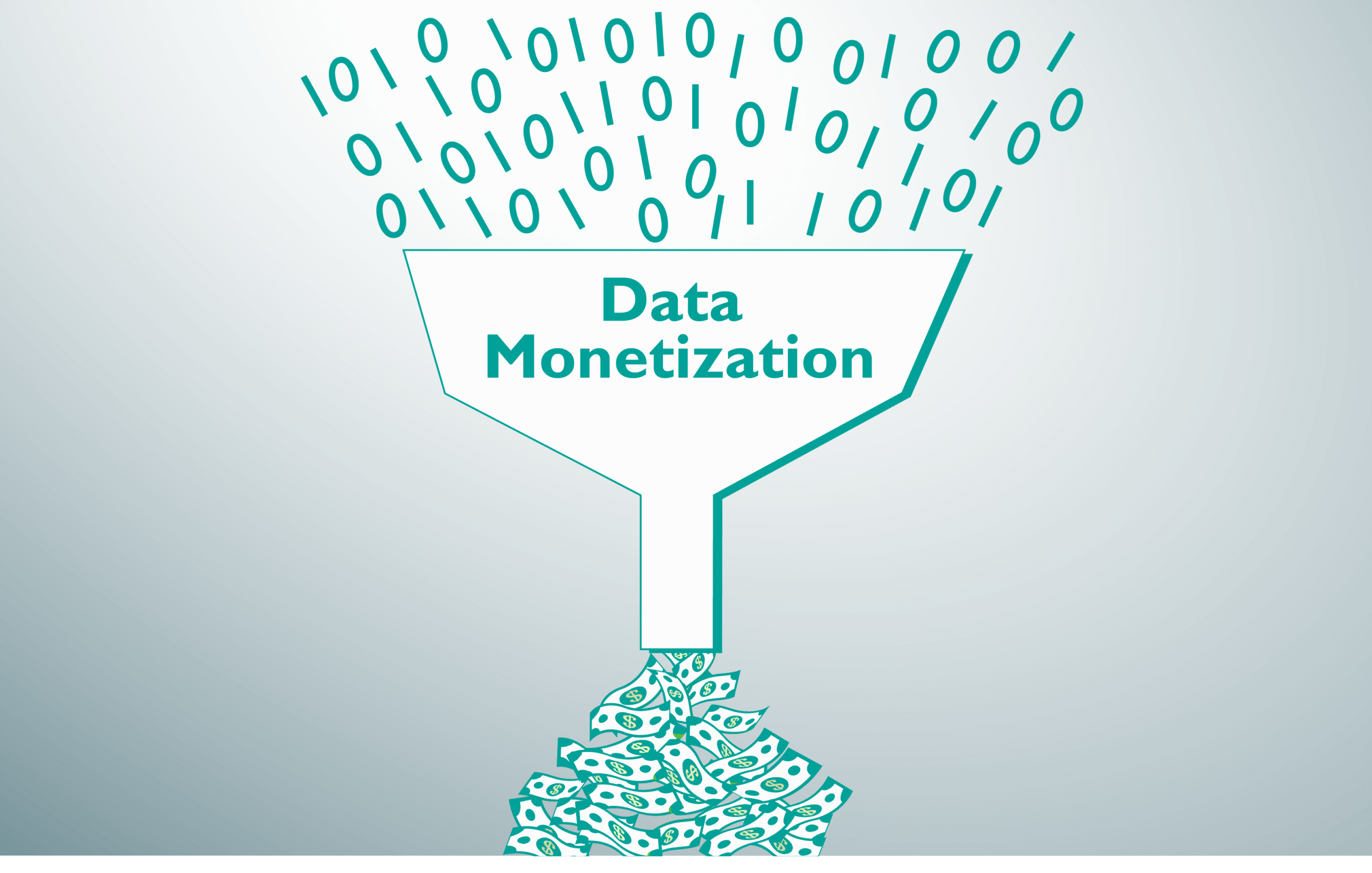
Most enterprises already sit on valuable data. The challenge is not whether that data has commercial value. The challenge is how to turn it into revenue without creating operational risk, compliance exposure, and delivery chaos.
That is the real promise of data monetization.
In theory, monetizing enterprise data sounds simple: package a dataset, sell access, and create a new revenue stream. In practice, that approach breaks down the moment external customers, partner engineering teams, or subscription-based entitlements enter the picture. A few CSV exports or custom partner APIs may work for one account, but they do not scale into a reliable data monetization strategy.
That is why leading organizations are moving toward an enterprise data marketplace model backed by governed data delivery.
Elementrix is designed for exactly this shift. It positions itself as a Data Hub & Marketplace that makes data products discoverable, self-serviceable, and centrally governed, while every access path remains subject to governance, auditing, and access controls.
What data monetization really means
At its core, data monetization is the process of using company-generated data to create measurable economic benefit. That benefit may come from selling data externally, offering premium data services, enabling partner products, or creating new subscription-based offerings around governed data access.
But selling data is not the same as exposing data.
A real data monetization program must answer operational questions that ad hoc delivery methods cannot handle well:
- Who is allowed to access which product?
- Which fields or records are available under each plan?
- How are privacy rules enforced?
- How is usage metered?
- How is invoicing tied to actual consumption?
- How do you revoke access immediately when risk appears?
- How do you prevent partner traffic from stressing production systems?
These are not side questions. They are the core of sustainable monetization.
Why most data monetization efforts break at scale
Many enterprises begin with what looks like a quick win.
They share CSVs.
They expose partner-specific APIs.
They drop files into shared storage.
They build a one-off export service for a high-value customer.
The problem is not that these methods never work. The problem is that they only work temporarily.
As soon as you introduce multiple customers, multiple plans, commercial tiers, contractual restrictions, audit requirements, and privacy policies, the operating model becomes unstable. Every new customer introduces another exception. Every plan becomes another dataset. Every special condition becomes another branch in delivery logic.
That is where data monetization platform thinking becomes essential.
The better pattern: enterprise data marketplace plus governed delivery
A strong enterprise data marketplace is more than a catalog. It is a controlled commercial layer where buyers can discover, evaluate, request, and purchase data products. At the same time, the runtime delivery layer must enforce the commercial terms automatically.
This distinction matters.
A marketplace without runtime control creates one problem.
Runtime controls without marketplace workflows create another.
According to broader industry definitions, a data marketplace is a centralized platform where organizations can discover, access, share, buy, or sell data assets in a governed way. Strong marketplaces reduce access friction, standardize data exchange, and support both internal and external sharing.
Elementrix fits this model closely. It describes its platform as a marketplace-driven environment for discoverable data products, with centralized governance over access and distribution.
Why governed data delivery matters
Discovery alone does not monetize anything.
A buyer does not purchase “raw access.”
A buyer purchases a governed data product with specific rights, limits, and expectations.
That means a workable external data marketplace needs to connect commercial state to runtime behavior. Once a buyer selects a plan, the platform must enforce:
- tenant-specific entitlements
- tier-specific field access
- policy-based privacy controls
- approved delivery channels
- rate limits
- subscription dates
- metering rules
- audit logs
This is where governed data delivery becomes the real differentiator.
Without it, your marketplace may look polished, but the delivery model underneath is still fragile.
Treat data as a product, not a file
One of the strongest shifts in modern data architecture is moving from unmanaged tables and exports to data products.
A monetizable data product is not just a dataset. It includes:
- a defined schema
- ownership and stewardship
- commercial packaging
- freshness expectations
- versioning rules
- usage constraints
- SLA expectations
- delivery methods
- governance policies
Elementrix explicitly frames its platform around Data as a Product and a centralized Enterprise Data Marketplace, which is important because monetization becomes much easier when products are packaged, documented, and governed consistently.
The biggest operational risks in external monetization
When companies try to monetize data externally, five operational issues show up repeatedly.
1. Licensing exists on paper, not in runtime
Contracts are signed, but the delivery layer cannot actually enforce them.
2. Tiering becomes unmanageable
Basic, Pro, and Enterprise plans turn into separate datasets, separate pipelines, and duplicated maintenance.
3. Privacy rules become inconsistent
Masking and row-level filters differ across teams, tools, and partners.
4. Metering is weak
You cannot bill reliably if usage records are incomplete or inconsistent.
5. Revocation is slow
When a customer should lose access, the platform cannot stop delivery immediately.
These are exactly the types of gaps that turn “revenue opportunity” into “governance burden.”
What a scalable data monetization strategy looks like
A scalable data monetization strategy starts with productization, not with export scripts.
A stronger model looks like this:
Define the data product
Package the dataset with business meaning, schema, ownership, and service expectations.
Classify for sale
Review the product for legal, compliance, and security requirements before publication.
Publish to the marketplace
Expose documentation, previews, pricing, terms, and value proposition without exposing sensitive content.
Let buyers evaluate and purchase
Enable self-service discovery and plan selection.
Provision entitlements automatically
Turn commercial state into runtime state.
Deliver through governed channels
Use controlled APIs, secure files, or approved connectors.
Meter usage continuously
Track calls, volume, exports, and thresholds in a billable way.
Audit and revoke as needed
Maintain a full trail and a real kill switch.
This is the difference between “selling data occasionally” and building a repeatable monetization engine.
Why tenant isolation and runtime enforcement are critical
If multiple customers consume the same platform, tenant isolation becomes non-negotiable.
Each partner must only see its own entitled view of the product. That includes allowed fields, approved records, contractual time windows, and plan-based limits.
When this is handled well, you can sell multiple commercial packages from the same underlying product without duplicating your delivery pipelines. When it is handled poorly, every customer becomes a bespoke engineering project.
For enterprise teams, this is one of the biggest reasons to move toward a purpose-built data product marketplace instead of continuing with one-off partner integrations.
Secure data sharing is not the same as monetization readiness
A lot of teams already support some form of secure data sharing. They may use APIs, SFTP, signed URLs, or partner portals.
That is useful, but it is not enough.
A platform becomes monetization-ready when it can combine:
- secure delivery
- access governance
- entitlement management
- pricing and plans
- usage metering
- invoice-ready consumption records
- auditability
- instant revocation
That full stack is what turns delivery into commerce.
Why self-service matters for revenue growth
A good self-service data marketplace reduces sales friction.
Buyers should be able to browse products, compare plans, review documentation, preview schemas, and understand commercial options without waiting for repeated manual enablement cycles. That does not mean removing governance. It means making governance operational and repeatable.
Industry descriptions of data marketplaces consistently highlight self-service access, discoverability, metadata-driven search, and structured governance as core capabilities.
That matters commercially because every unnecessary handoff slows down revenue.
How Elementrix supports this model
Elementrix presents itself as a governed marketplace platform where data products are discoverable, reachable, self-serviceable, and available for immediate consumption, while access remains centralized and governed. It also emphasizes Data-as-a-Product and enterprise-wide marketplace capabilities.
That positioning aligns directly with what enterprises need when building monetization programs:
- governed product packaging
- centralized access control
- auditable data distribution
- marketplace-style discovery
- runtime control over who gets what
In other words, Elementrix is not just helping organizations expose data. It is helping them commercialize governed data access in a more scalable way.
A practical checklist before you monetize data externally
Before launching an external offering, ask these questions:
- Is the dataset packaged as a real product?
- Are pricing tiers mapped to runtime entitlements?
- Can you enforce masking and filters automatically?
- Can you issue and manage access credentials cleanly?
- Can you meter consumption accurately enough for billing?
- Can you revoke access immediately?
- Can you prove who accessed what, when, and under which entitlement?
- Can your upstream systems handle demand, or do you need decoupled delivery?
If the answer to several of these is “not yet,” the opportunity may still be valid, but the operating model is not ready.
Final takeaway
The best data monetization programs do not start with “How do we export this dataset?”
They start with:
How do we package, govern, deliver, meter, and control this as a commercial data product?
That is the real shift from ad hoc sharing to scalable revenue.
If your organization wants to build an enterprise data marketplace without losing control over privacy, entitlements, tenant isolation, metering, and revocation, Elementrix is worth a closer look.
Explore Elementrix to see how a governed marketplace and data delivery model can help you turn data into revenue without turning operations into chaos.
FAQ
What is data monetization?
Data monetization is the process of using enterprise data to create measurable economic benefit, including revenue generation, premium services, or new data-driven offerings.
What is an enterprise data marketplace?
An enterprise data marketplace is a centralized platform where organizations can discover, access, share, buy, or sell governed data assets and data products.
Why do data monetization projects fail?
They usually fail when pricing, entitlement management, privacy enforcement, delivery, and billing are handled as separate manual processes rather than one governed runtime model.
What does governed data delivery mean?
It means the delivery layer enforces commercial and governance rules at runtime, including entitlements, privacy controls, limits, and auditability.
How does Elementrix help monetize data?
Elementrix combines marketplace discovery with governed access and centralized control over data product consumption and distribution.