



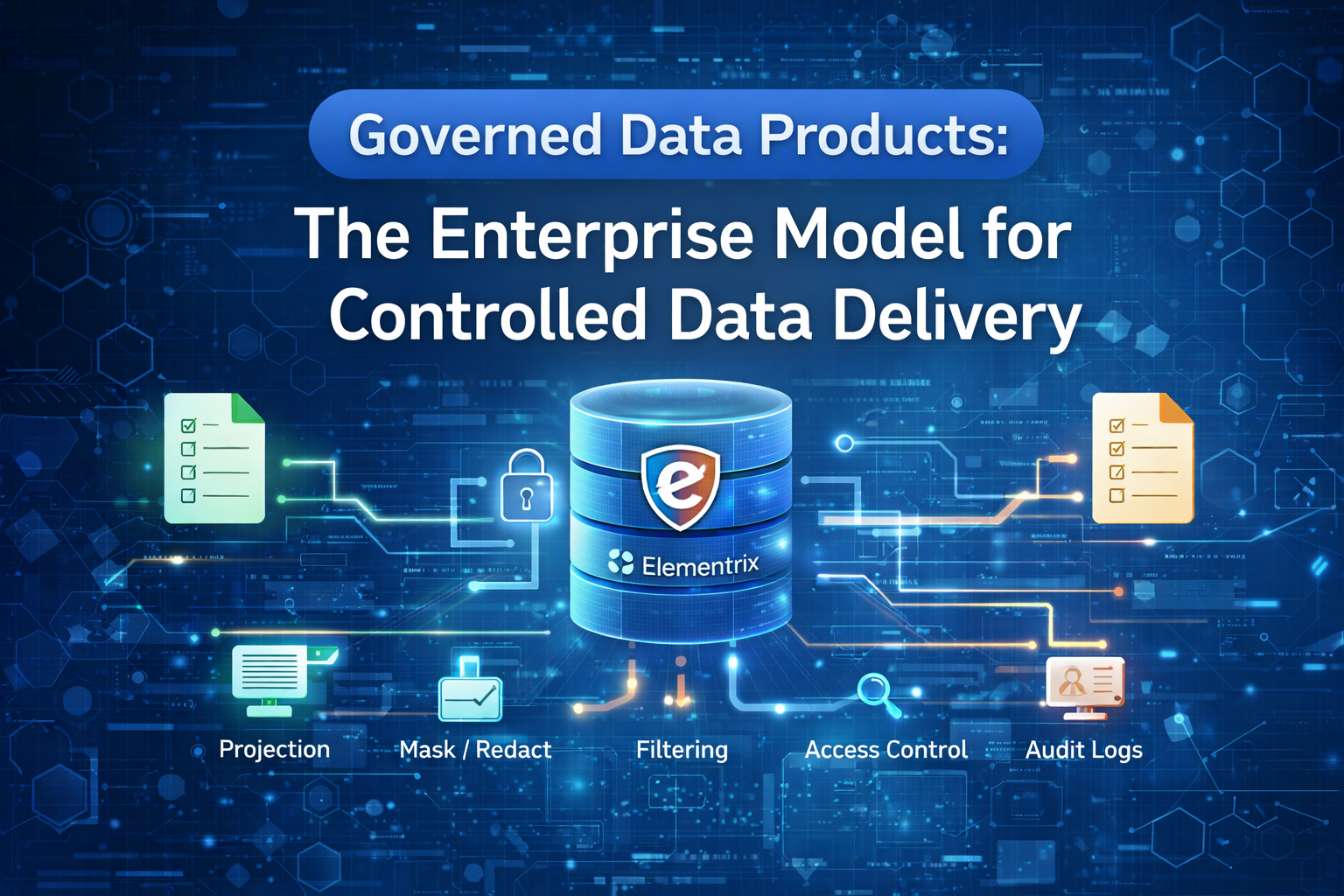
Why Enterprise Systems Need a Better Data Delivery Model
As enterprise ecosystems scale, the way data is delivered becomes just as critical as the data itself.
Many organizations focus on APIs as delivery units. But over time, this endpoint-centric model introduces duplication, fragmented access rules, inconsistent governance, and rising operational complexity.
The alternative is not fewer APIs.
The alternative is governed data products.
What Is a Governed Data Product?
A governed data product is a versioned, policy-controlled data contract designed for enterprise consumption.
It is not just a dataset.
It is a structured delivery model that includes:
- Clear ownership and stewardship
- Versioned schema management
- Access approval workflow
- Field-level entitlements
- Audit logging and compliance tracking
- Runtime performance guarantees
Instead of building separate integrations per consumer, organizations publish one durable data product and apply policy-driven access controls.
Read more : Build an Internal Data Marketplace with Governance
From Endpoint-Centric to Product-Centric Architecture
In an endpoint-centric model:
- Each consumer may require a slightly different response shape
- Masking and access rules are implemented repeatedly
- Access logic is duplicated across services
- Schema changes break multiple integrations
In a product-centric architecture:
- One canonical data contract is defined
- Consumers receive policy-driven views
- Access is centrally enforced
- Governance becomes executable, not documented
This shift reduces cognitive load for engineering teams and increases consistency across domains.
How Policy-Driven Data Access Works
Most data variations across consumers fall into predictable categories:
- Field visibility (masking sensitive attributes)
- Scope restrictions (tenant, region, account rules)
- Response shaping (flattened vs nested fields)
- SLA and rate-limit differences
- Audit requirements
A governed data product uses configuration and policy to manage these differences — not new code paths.
This ensures:
- Least-privilege access
- Consistent enforcement
- Reduced integration overhead
- Faster onboarding for new consumers
The Operational Benefits of Governed Data Products
1. Reduced Duplication
Instead of cloning integrations, teams reuse the same product across multiple audiences.
2. Improved Governance
Field-level data access control ensures compliance at runtime — not as an afterthought.
3. Predictable Performance
By separating production systems from consumption workloads through controlled distribution patterns, organizations reduce upstream read pressure and stabilize latency.
4. Cleaner Lifecycle Management
Versioning and lifecycle states (draft → approved → published) create transparency and accountability.
The Enterprise Adoption Path
Governed data products do not require a platform rewrite.
A practical approach includes:
- Identifying high-friction domains with repeated integration logic
- Defining a canonical product contract
- Routing new consumers through the governed model
- Migrating high-maintenance variants
- Measuring reuse and adoption
The goal is not centralization for its own sake.
The goal is controlled, scalable data delivery.
Read more : Fix API Sprawl with Modern Data Governance
Measuring Success: What to Track
To evaluate maturity, organizations should measure:
- Time-to-first-consumption
- Approval workflow duration
- Reuse rate (consumers per data product)
- Exception rate (bypass attempts)
- Schema change incident impact
If adoption increases and integration friction decreases, the model is working.
Why Governed Data Products Matter for Digital Scale
Enterprise systems do not fail because they grow.
They struggle when growth is unmanaged.
Governed data products provide:
- Structural consistency
- Enforced policy
- Reduced duplication
- Clear ownership
- Predictable performance
They transform data delivery from an integration exercise into an operating model.
Frequently Asked Questions
What is a governed data product?
A governed data product is a structured, policy-controlled data delivery contract that includes ownership, versioning, access workflows, and field-level entitlements.
How is a data product different from an API?
An API is an interface. A data product is a governed contract that defines how data is versioned, accessed, secured, and audited across consumers.
Why are field-level entitlements important?
They enforce least-privilege access by controlling which attributes each consumer can view, reducing compliance and security risks.
How do governed data products improve scalability?
By reducing duplication and centralizing policy enforcement, they make integration predictable and maintainable as systems grow.
Can governed data products replace endpoint duplication?
Yes. Instead of creating separate integrations for each consumer, policy-driven views allow controlled reuse of a single canonical contract.
Read more : API Performance Optimization: How to Prevent Read Storms